Roofing crew • layout, fastening, trim, and exterior coordination
Metal Roof Installation • Details That Prevent Failures
Metal roofing has a strong durability reputation, but the metal itself cannot compensate for bad installation. Most real-world roof problems begin at details: fasteners, panel laps, valleys, wall transitions, penetrations, ridge assemblies, eaves, rake trim, sealant locations, or movement that was not accounted for. A roof can use premium panels and still leak if those transitions are treated like an afterthought.
Exposed-fastener roofing depends on the correct screw, washer, placement, angle, and compression. Overdriven screws can damage washers; underdriven screws may not seal; crooked fasteners can leave uneven pressure. The fastener material must also be compatible with the panel. Industry guidance from the Metal Construction Association treats fastener compatibility as a key part of a strong, weather-tight profiled metal roof. On standing seam systems, concealed clips and attachments must be selected and installed so the panels can stay secure while accommodating thermal movement.
Metal expands when it heats and contracts when it cools. Long roof panels in the Midwest can experience meaningful movement across seasonal temperature swings. Standing seam clip systems are commonly designed to allow controlled movement. Exposed-fastener systems manage movement differently through panel length, fastening pattern, and manufacturer instructions. When installers fight the material instead of following the system, stress can show up as elongated holes, loose fasteners, distorted panels, noisy movement, or failed seal points.
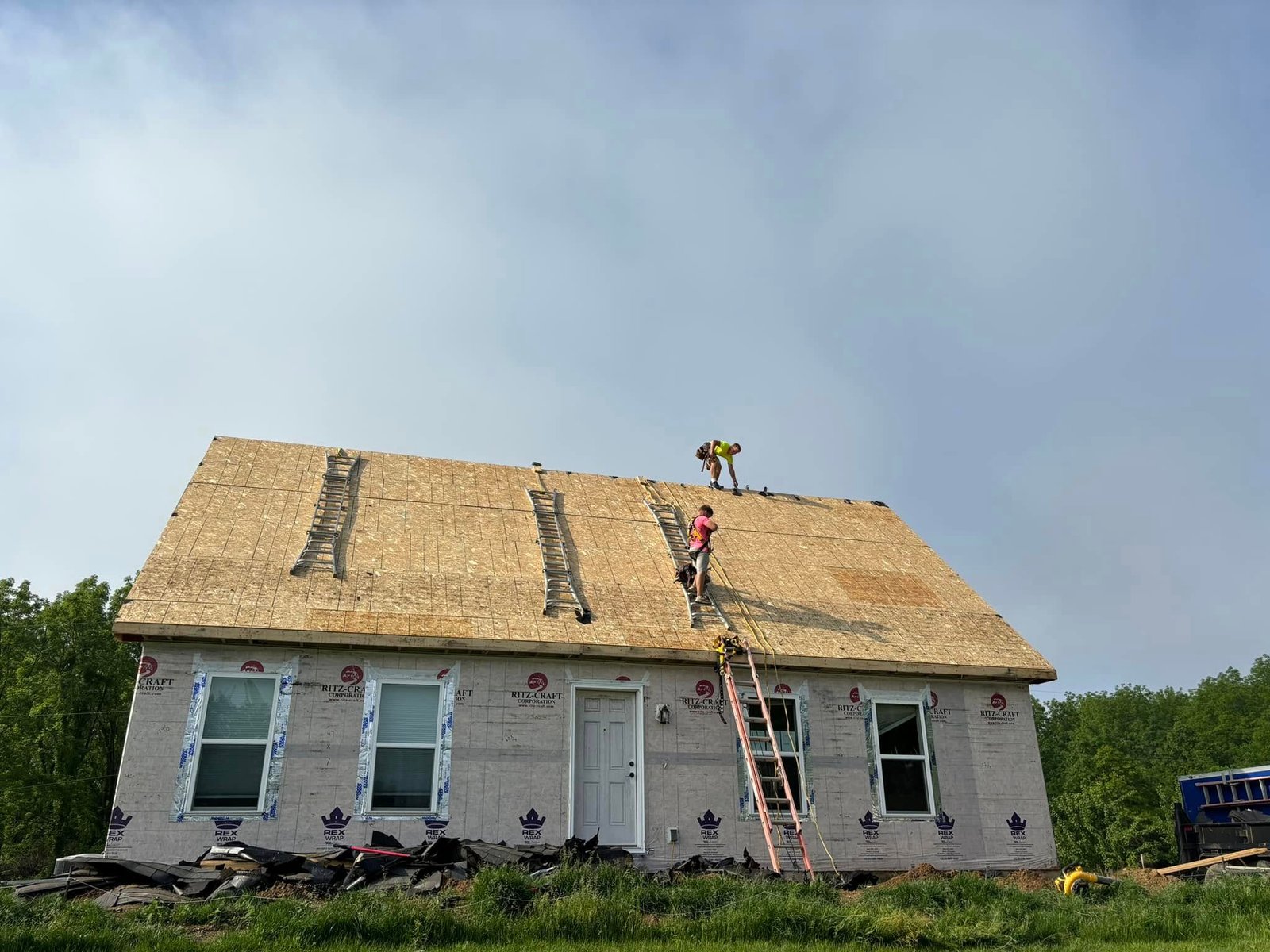
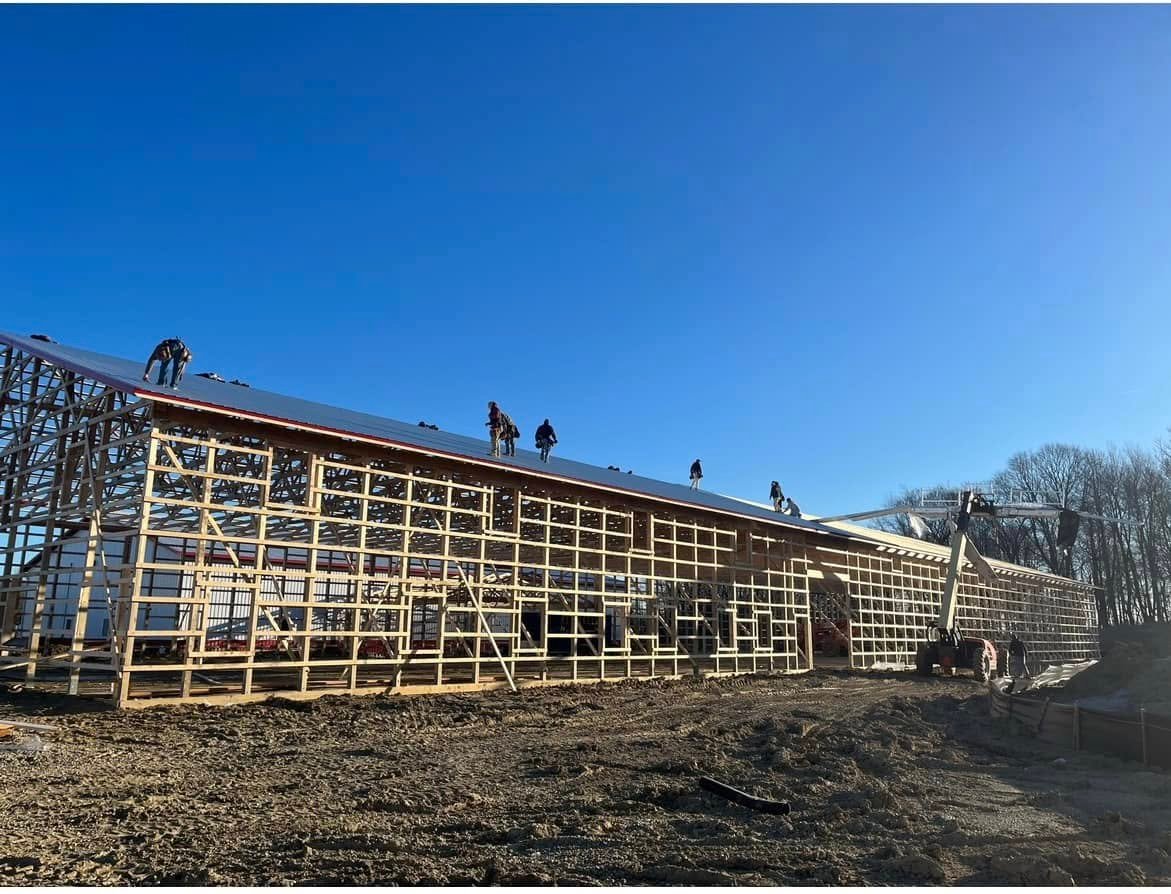
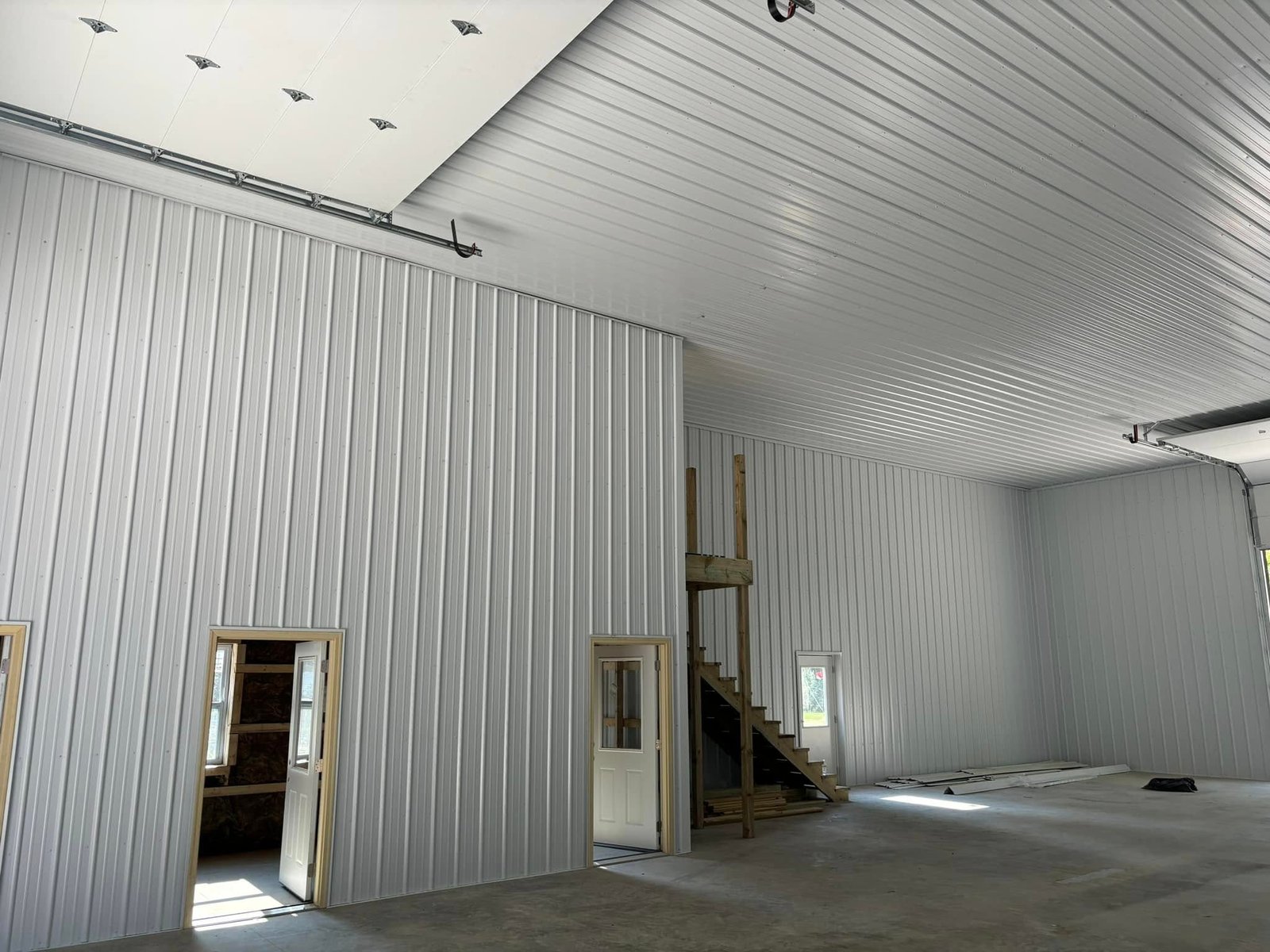
These are project photos from the Hershberger Construction crew—not stock roofing images.
Valleys, chimneys, sidewalls, endwalls, transitions, roof-to-wall intersections, plumbing penetrations, and roof edges are where water changes direction. Those are the places that separate a clean metal roof installation from panel coverage alone. Flashing needs to work with gravity, overlap, drainage path, panel profile, and sealant—not depend on a bead of caulk to rescue a weak detail. Sealant is useful where the system calls for it, but it should not be the entire waterproofing strategy.
Straight panel lines are not cosmetic fluff. Layout determines where seams land, how cuts meet roof edges, how ribs align with penetrations, and whether the finished roof looks controlled. On a visible home roof, poor starting measurements can create tapered panels or awkward edge conditions. On a long barn roof, small layout errors multiply across dozens of panels. Measure, square, plan, then fasten.
A correctly installed roof still deserves periodic inspection. Check after severe storms and as the system ages. Look for storm damage, debris, sealant deterioration, loose or damaged trim, unusual panel movement, exposed-fastener washer condition, and changes around penetrations. Catching a small issue early is cheaper than waiting until water damages decking, insulation, ceilings, or stored equipment.
Hershberger Construction’s main metal roofing page explains the installation service and project scope. For local coverage, use the Indiana metal roofing page or the Michigan metal roofing page. Long roof life is not created by the phrase “metal roof.” It comes from system compatibility, correct layout, disciplined fastening, flashing that drains, and details built to move and stay sealed.
For a project quote, call 260-214-4077 or request a quote from Hershberger Construction.